
Most deal teams underestimate the cost of blind spots
When organisations evaluate private market intelligence vendors, the discussion often centers around software pricing, feature sets, or workflow speed. But a more important question is often overlooked:
What does incomplete market visibility actually cost?
In private markets, weak visibility can create missed opportunities, poor buyer universes, incomplete shortlists, weak strategic mapping, reputational risk, and slower conviction across sourcing and execution workflows. These costs are rarely obvious immediately.
But over time, they compound. And in competitive deal environments, even small blind spots can create meaningful strategic downside.
Incomplete visibility creates strategic risk
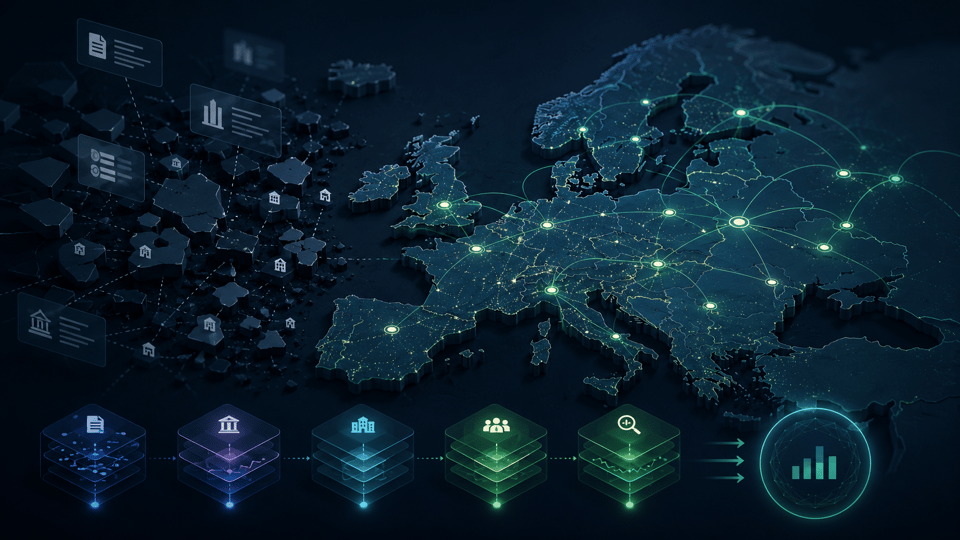
Private markets are structurally fragmented where companies may sit behind layered ownership structures. Regional markets may be poorly mapped. Strategic relationships can remain hidden across disconnected entities, jurisdictions, and ecosystems.
Without contextual intelligence, deal teams often operate with partial information and incomplete market understanding. That creates risk across workflows such as acquisition sourcing, buyer identification, competitive analysis, ecosystem mapping, and strategic screening.
The problem is not simply missing information, it is operating with incomplete visibility while believing the market map is complete. That distinction matters because high-stakes decisions are often shaped as much by what teams cannot see as by what they can.

The hidden economics of weak intelligence
The cost of incomplete visibility extends far beyond research inefficiency.
It can affect opportunity discovery, sourcing precision, strategic timing, buyer universe quality, and even external credibility during live deal processes.
Relevant acquisition targets may never surface inside the workflow. Advisors may miss strategic acquirers. Private equity firms may pursue weaker-fit opportunities because broader market visibility remains incomplete. Corporate development teams may identify important opportunities too late to act effectively.
In many cases, the downside is invisible because the missed opportunity itself is never fully known. That makes weak intelligence particularly difficult to measure.
But experienced deal teams recognise the pattern immediately: incomplete market maps create weaker decisions over time.
Why you should care
Modern dealmaking environments are becoming faster, more competitive, increasingly AI-assisted, and significantly more information-dense.
At the same time, fragmented markets continue creating complexity around ownership structures, regional ecosystems, and relationship visibility.
This increases the importance of verification, contextual visibility, workflow-native intelligence, ownership mapping, and trusted datasets capable of supporting high-confidence workflows.
AI can improve productivity dramatically, but productivity without visibility does not necessarily improve outcomes. In many cases, faster workflows operating on incomplete intelligence simply accelerate weak assumptions.
That is why trusted intelligence infrastructure is becoming strategically more important as AI adoption accelerates across private markets.
Better intelligence supports better decisions
The strongest intelligence systems do more than accelerate search. They help deal teams reduce blind spots, improve market understanding, strengthen conviction, validate assumptions faster, and operate with greater confidence across fragmented environments.
That is the real value of contextual intelligence.
As AI interfaces become increasingly common, the quality of the underlying intelligence layer increasingly determines the quality of the workflow itself.
The future advantage is unlikely to belong solely to the teams operating fastest.
It will belong to the teams operating with the clearest market visibility.
The logic behind premium intelligence
Premium intelligence should not be evaluated only through feature comparisons or workflow speed. Its value often comes from reducing uncertainty, improving visibility, strengthening sourcing precision, and supporting better strategic decisions over time.
That is why the economics of intelligence are often misunderstood. The question is not simply:
“What does this intelligence cost?”
The more important question is:
“What does incomplete visibility cost?”