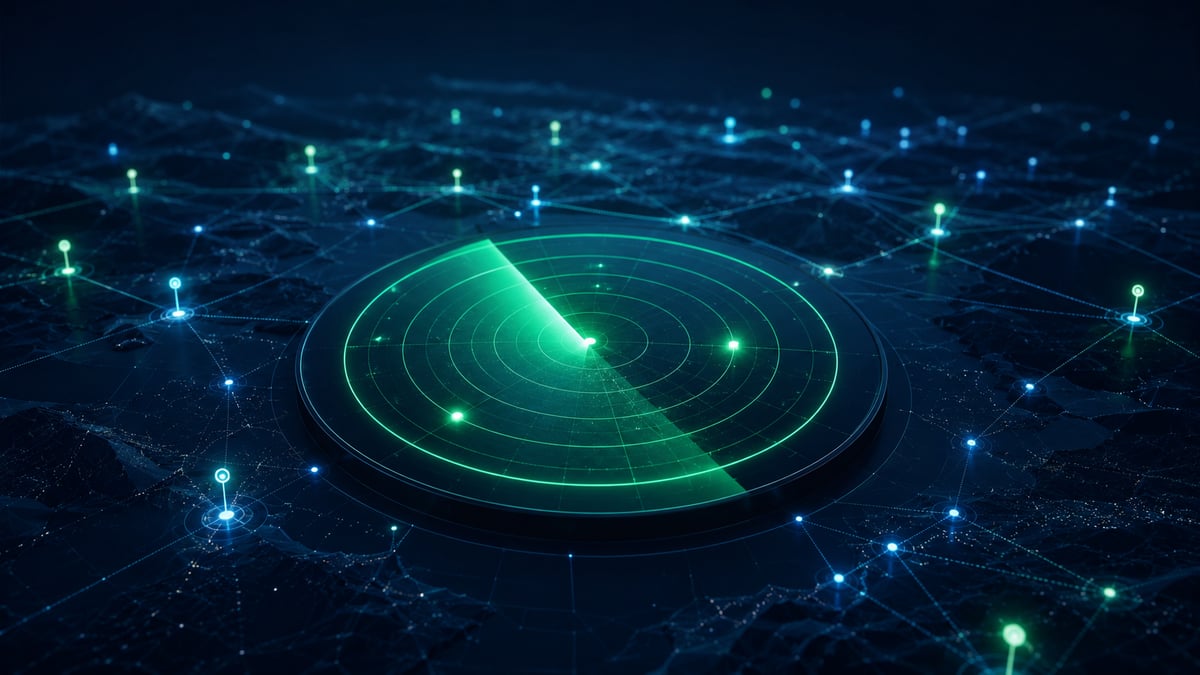

Corporate M&A is becoming continuous
Corporate development teams are under increasing pressure to operate proactively rather than reactively. Historically, acquisition research was often event-driven. A strategic initiative emerged, a market shifted, or a competitor made a move. And only then did the search for targets begin.
But modern M&A environments move too quickly for purely reactive workflows.
The most sophisticated corporate development teams are increasingly building always-on acquisition intelligence systems designed to maintain continuous visibility into markets, sectors, and ownership ecosystems long before a formal process begins.
The shift is subtle, but strategically important.
The challenge is no longer simply finding acquisition opportunities. It is seeing them early enough to act with confidence.
Why fragmented markets create visibility gaps
Many acquisition opportunities remain difficult to identify early, especially in fragmented European markets.
Potential targets often operate privately, sit beneath complex holding structures, span multiple jurisdictions, or remain largely invisible within traditional research workflows. By the time a company becomes broadly visible, the strategic window may already be narrowing.
As competition for high-quality assets increases, incomplete visibility becomes a strategic disadvantage. That is why modern acquisition intelligence is increasingly centered around continuous market awareness rather than periodic research projects.
The issue is no longer access to information alone.
It is maintaining contextual visibility across evolving markets.
From static target lists to intelligence systems
Traditional acquisition research often relied on periodic screening exercises, spreadsheet-driven workflows, disconnected projects, and manual updates.
Modern acquisition intelligence systems operate very differently.
Instead of creating static target lists once or twice a year, leading corporate development teams now maintain dynamic market maps that evolve continuously alongside sectors, ownership structures, strategic relationships, and transaction activity.
The goal is not simply to track companies. It is to understand ecosystems.
That includes monitoring ownership changes, identifying strategic adjacencies, mapping relationships between companies and investors, and detecting signals that may indicate future acquisition relevance.
In practice, acquisition intelligence becomes an ongoing strategic capability rather than a one-time research exercise.

What always-on acquisition intelligence actually looks like
An always-on acquisition intelligence workflow combines several layers of visibility simultaneously. It includes market mapping, ownership intelligence, strategic monitoring, relationship visibility, workflow-native discovery, and increasingly AI-assisted research capabilities.
That means corporate development teams are not just reviewing isolated company profiles. They are continuously monitoring broader ecosystems around sectors, technologies, adjacencies, investors, and strategic movements.
Modern workflows also increasingly integrate intelligence directly into day-to-day execution processes rather than forcing teams to operate across disconnected tools and spreadsheets.
AI can accelerate this process significantly by helping teams surface patterns, identify signals, and analyze fragmented information faster. But speed alone is not enough.
The intelligence still needs to be contextual, verified, and trustworthy.
Why this matters now
Several market forces are converging simultaneously.
Deal competition is increasing. Private markets remain fragmented. AI is accelerating research speed across the industry, while strategic windows are becoming shorter and buyers more disciplined. Together, these shifts create a new requirement for corporate development teams:
faster visibility with higher confidence.
The long-term advantage is unlikely to belong to the teams conducting the most manual research. It will belong to the teams operating with the strongest intelligence infrastructure beneath their workflows.
The future of acquisition intelligence
Corporate M&A is steadily becoming more intelligence-driven.
Acquisition workflows are moving away from disconnected databases, manual list building, and fragmented research processes toward contextual intelligence layers, workflow-native systems, AI-assisted execution, and connected market visibility.
The most effective acquisition teams will likely not be those reacting fastest.
They will be those maintaining the clearest continuous visibility into their markets.